Competency in The Implementation and Practice of New Pedagogies for Deep Learning (NPDL) among IPGK PM Teacher Trainees: The Relationship between Knowledge and Skills
Keywords:
New pedagogies of deep learning, knowledge, skills, competence, trainee teachersAbstract
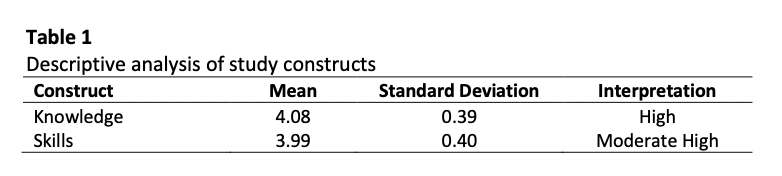
The implementation of New Pedagogies for Deep Learning (NPDL) at Institute of Teacher Education Malaysia (IPGM) aims to develop the ability of teacher trainees to connect learning with real life, current context and future needs. NPDL also plays a role as an innovative approach in strengthening pedagogical practices and instructional capabilities of lecturers to support the execution of more meaningful, authentic and quality teaching and learning. In regard of this, the study aims to identify the level and relationship between the knowledge and skills of trainee teachers in the implementation of NPDL. This survey study involved 222 trainee teachers from various options selected through simple random sampling techniques. Data were collected using a Likert scale-based questionnaire instrument and analyzed quantitatively through descriptive statistics and correlation analysis to determine the relationship between the variables studied. The findings show that the level of knowledge of trainee teachers is at a high level (Mean = 4.07, SD = 0.39), while the level of skills is at a moderately high level (Mean = 3.99, SD = 0.39). Correlation analysis also showed that there was a strong and significant positive relationship between knowledge and skills of trainee teachers in implementing NPDL (r = 0.770, p < .01). This finding indicates that the higher the level of knowledge of trainee teachers about NPDL, the higher the tendency of their skill level in implementing NPDL. Overall, the study findings imply that knowledge mastery is an important aspect in strengthening NPDL implementation skills. Therefore, efforts to develop the competence of trainee teachers need to give a balanced emphasis between conceptual mastery and practical mastery so that NPDL principles can be applied more meaningfully and authentically.