Transformational Leadership, Teacher Well-Being and Innovative Work Behavior: Mediation in the National School Context
Keywords:
Transformational leadership, teacher well-being, innovative work behavior, teacher leadershipAbstract
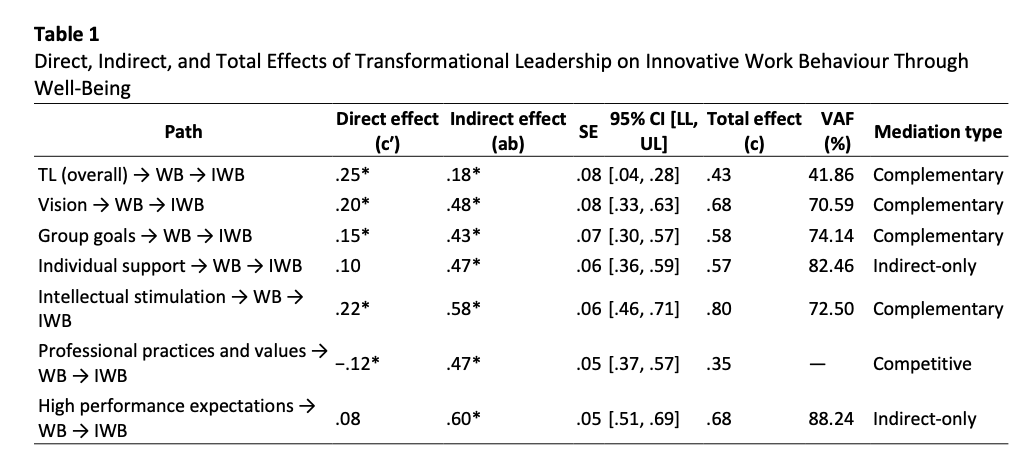
Twenty-first-century learning requires teachers to innovate, which in turn depends on agile school leadership and a supportive work environment. National indicators show that only 43.23% of teachers display a high level of innovative work behavior (IWB), even though transformational leadership (TL) practices are widely implemented. This gap raises the question of how leadership is translated into innovation. This study examined teacher well-being as a mediator between TL and IWB in national primary schools. Using a quantitative cross-sectional design, data were collected from 351 randomly selected teachers in 23 schools in the Barat Daya District of Penang. Adapted scales measured TL, teacher well-being and IWB, with high overall reliability (α ≈ .97). Mediation analysis with the PROCESS macro (Model 4) showed a significant indirect effect of TL on IWB through well-being (B = 0.18, SE = 0.08, p < .001, 95% CI [0.04, 0.28]). Among the TL dimensions, high performance expectations and intellectual stimulation had the largest indirect effects. These findings are consistent with the Job Demands–Resources and Broaden-and-Build theories, which hold that positive work environments support teacher engagement and innovation. The results suggest that teacher well-being is one psychosocial mechanism through which leadership is translated into innovative practice. School leaders are advised to prioritize well-being-focused strategies, such as building psychological safety, reducing administrative burdens and recognizing teacher effort, to strengthen innovation in schools. The study contributes to leadership theory in education and offers practical guidance for leadership development.