Preliminary Psychometric Evaluation of a Multidimensional Instrument for the Rehabilitation of Delinquent Students from Low-Income Families in East Coast Malaysia
Keywords:
Delinquent students, low-income families, psychometric evaluationAbstract
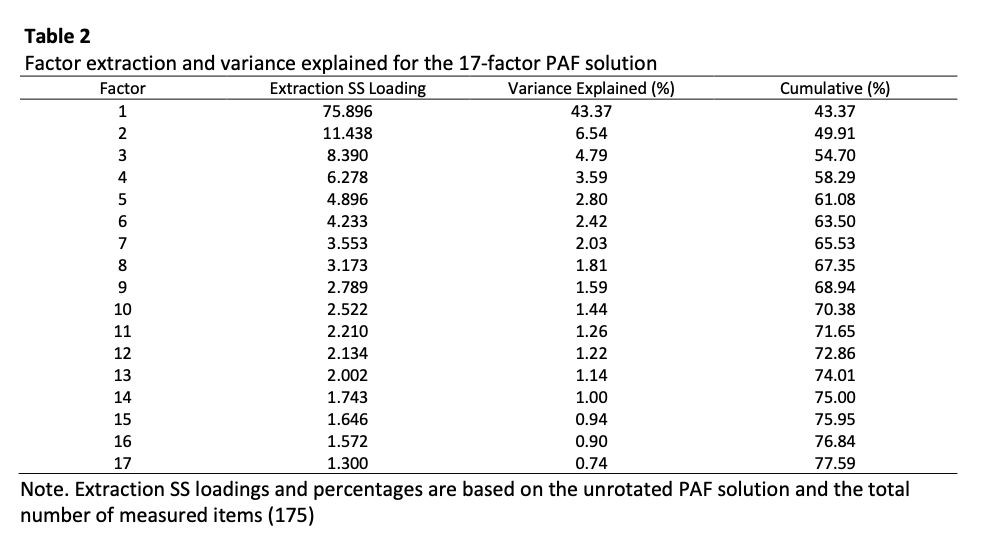
Delinquent behaviour among students from low-income families is a complex issue shaped by interacting psychological, educational, social, socioeconomic, intervention, and well-being factors. This study aimed to evaluate the preliminary psychometric properties and factor structure of a multidimensional instrument developed to support the assessment and rehabilitation of delinquent students from low-income families in East Coast Malaysia. A quantitative cross-sectional survey design was employed involving 122 university students from B40 households who completed 175 items covering 17 constructs derived from the study’s theoretical framework. The questionnaire was distributed randomly among eligible students meeting the study’s B40 criterion. Negatively worded items were reverse coded prior to analysis. Data were analysed using the Kaiser–Meyer–Olkin (KMO) measure, Bartlett’s test of sphericity, Principal Axis Factoring (PAF) with Promax rotation, factor-loading and cross-loading assessment, corrected item-total correlations (CITC), and Cronbach’s alpha. The overall KMO value was 0.782, while Bartlett’s test of sphericity was statistically significant, χ²(15,225) = 42,712.95, p < .001, indicating that the item pool was suitable for factor analysis. The theory-informed 17-factor solution accounted for approximately 77.59% of the total variance in the measured item pool. Most constructs demonstrated good to excellent internal consistency, although Self-Esteem showed comparatively low reliability (α = .581). Several items exhibited weak primary loadings and/or potential cross-loadings and were identified for further review based on statistical and theoretical considerations. Negative factor-loading signs were interpreted according to their absolute magnitude rather than treated as evidence of poor item quality. Overall, the findings provide preliminary evidence for the factorability, multidimensional structure, and internal consistency of the instrument. However, the relatively small sample size compared with the number of items limits the conclusiveness of the findings. Further validation using a larger and independent sample, followed by confirmatory factor analysis, is recommended before the instrument is considered fully validated for rehabilitation assessment and intervention purposes