Religious Affiliation and Intrinsic Motivation: Evidence from Malaysian Bank Employees
Keywords:
Religious affiliation, intrinsic motivation, work motivation, banking sector, MalaysiaAbstract
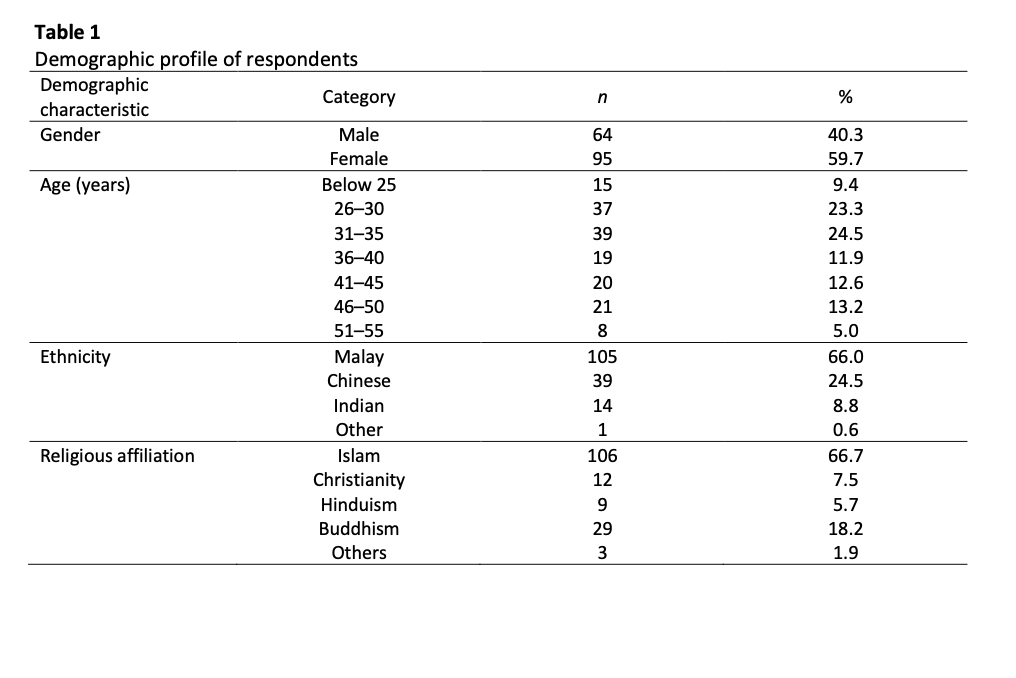
Religion represents an important dimension of Malaysia’s socio-cultural environment, yet the relationship between religious affiliation and employees’ intrinsic motivation remains comparatively underexplored. This study examines whether intrinsic motivation differs between Muslim and non-Muslim employees in the Malaysian banking sector. Survey data were collected from employees of two Malaysian banks, with 159 responses included in the final analysis. Religious affiliation was analytically classified into Muslim (n = 106) and non-Muslim (n = 53) groups, while intrinsic motivation was assessed using the Work Preference Inventory (WPI). An independent-samples t-test indicated that intrinsic motivation did not differ significantly between Muslim (M = 3.26, SD = 0.39) and non-Muslim employees (M = 3.32, SD = 0.32), t(157) = −1.08, p = .283. The magnitude of the difference was small (Cohen’s d = −0.18). These findings indicate that religious affiliation, when considered as an analytical classification, did not meaningfully differentiate intrinsic motivation among employees in the sampled banks. The study provides context-specific evidence from Malaysia’s religiously diverse banking sector and highlights the importance of distinguishing religious affiliation from more proximal religion-related constructs when examining the relationship between religion and motivation at work.